
A version of this article was previously published in Beijing Review.
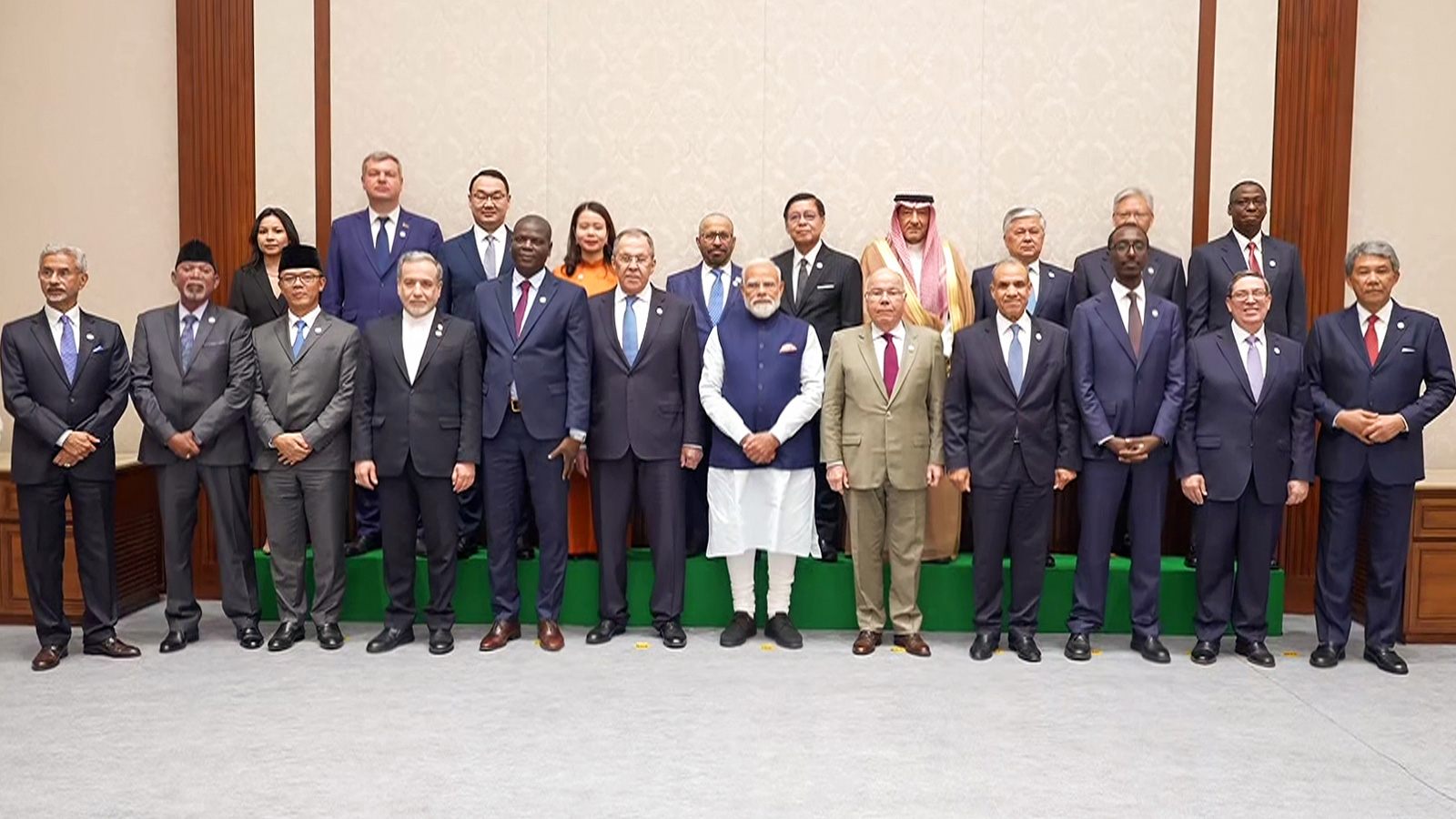
The New Delhi Declaration, issued at the 18th BRICS Summit on September 12-13, represents a significant escalation in the bloc’s push for economic and financial autonomy. I have argued since April, that the U.S. war against Iran and the ensuing disruption to the Strait of Hormuz is part of a multi-layered strategy to fracture BRICS and lock the Global South into the dollar-zone through weaponization of global fuel, fertilizer and food markets. Within this framework, the declaration’s explicit emphasis on energy security, fertilizer shortages, food-price volatility, and resilient supply chains is a direct response.
Although the declaration was a multilateral effort, India was clearly a driving force behind both its content and its framing. New Delhi’s imprint is visible throughout—particularly in the emphasis on supply-chain resilience, energy security, and financial autonomy, all of which address India’s specific vulnerabilities.
The Dichotomy Within BRICS
The declaration’s most notable feature is what it does not say. It does not call for abandoning Western dominated institutions, like the World Bank and the IMF. Instead, it calls for quota reforms and greater voting power for developing nations and explicitly calls for the WTO to be strengthened. It also does not call for a BRICS currency, but instead advocates for an interoperable payment systems and voluntary local-currency settlement.
India’s Minister for External Affairs, Sudhakar Dalela, said there is “no proposal in the BRICS for a BRICS currency as of now” and characterized local-currency settlement as complementary to the global payment and settlement system, rather than its replacement.1
This reveals an evolving dichotomy within BRICS. One faction—led by a vocal constituency in Russia—seeks greater independence from Western institutions, while the other—led mainly by India and Brazil—seeks greater autonomy within them. The declaration’s language reflects a compromise: reform, optionality, redundancy and bargaining power within the existing institutions rather than a rupture from them.
India’s Problem
India’s position illustrates the pressure driving this acceleration. Since the Hormuz closure in February, India has faced exposure on three fronts: fuel, fertilizer, and foreign exchange. The country imports over 80% of its energy and urea prices have almost doubled, from roughly $510 per tonne to $950 per tonne. As India’s import bill exploded pressure on both the current account and rupee has grown.
Against this backdrop, India’s actions reveal a careful balancing act. Prime Minister Modi publicly pressured President Putin at the recent Bishkek SCO summit to agree to a ceasefire in Ukraine and again during bilateral talks at the BRICS summit. This intervention is best understood as an attempt to alleviate economic pressure; pressure Washington could intensify with its recently introduced secondary-tariff regime of up to 100% on buyers of Russian oil. A regime that explicitly targets India. Against this backdrop, a ceasefire would begin normalizing energy markets and signal to Washington that New Delhi is willing to play a constructive role.
At the same time, India is accelerating the development of BRICS internal economic security. The declaration’s focus on resilient supply chains, local-currency settlement, and financial autonomy is India’s longer-term refuge. Washington’s pressure and BRICS’ integration are two sides of the same coin: the more the United States exerts economic leverage, the more incentive India has to build alternatives—but alternatives that won’t enrage Washington in the short-term.
The Strategic Logic
This leads us to the declaration’s most notable feature: its incrementalism. The political commitment to de-dollarization and financial autonomy is open-ended. The technical development of BRICS Pay and cross-border payment infrastructure is already underway, with pilots in 2026 and a roadmap extending toward 2030. But there is no operational deadline. The focus remains on practical mechanisms—local-currency settlement, payment interoperability, supply-chain resilience—rather than a dramatic break with the status quo.
A particularly significant theme is the protection of energy, food, fertilizer, and critical-mineral supply chains. The declaration explicitly recognizes that fossil fuels will remain important for developing economies and calls for the protection of critical energy infrastructure. BRICS now frames them as matters of strategic economic resilience—a direct acknowledgment that supply-chain vulnerabilities are being weaponized.
The New Delhi Declaration is, in essence, a response to the economic and financial pressures that are starting to mount as a direct consequence of the U.S. war against Iran. Pressures that I predicted in April were the intended consequences of the war. The explicit recognition of energy security, fertilizer shortages, and food-price volatility as strategic concerns reflects the reality that the Global South is simultaneously absorbing the shock and trying to insulate itself.
Whether this incremental strategy will succeed in buffering BRICS from Western economic leverage remains uncertain. The dichotomy between those who seek separation and those who seek autonomy within the system remains unresolved and likely to grow. But the direction is clear. The more the United States weaponizes the dollar system, the more incentive nations outside the West have to build alternatives. The New Delhi Declaration is the latest evidence that the U.S. strategy in West Asia is already reshaping the architecture of the Global South.